Angkola
Horas
The Angkola live in South Tapanuli Regency and the city of Padangsidimpuan; Sipirok is one of their cultural centres. Well-known marga include Harahap and Siregar. Angkola is closely related to Mandailing. Most Angkola are Muslim, some are Christian.
- Region
- Tapanuli Selatan, Padangsidimpuan
- Language
- Angkola
- Kinship
- Dalihan Na Tolu
Source: Suku Angkola — Wikipedia
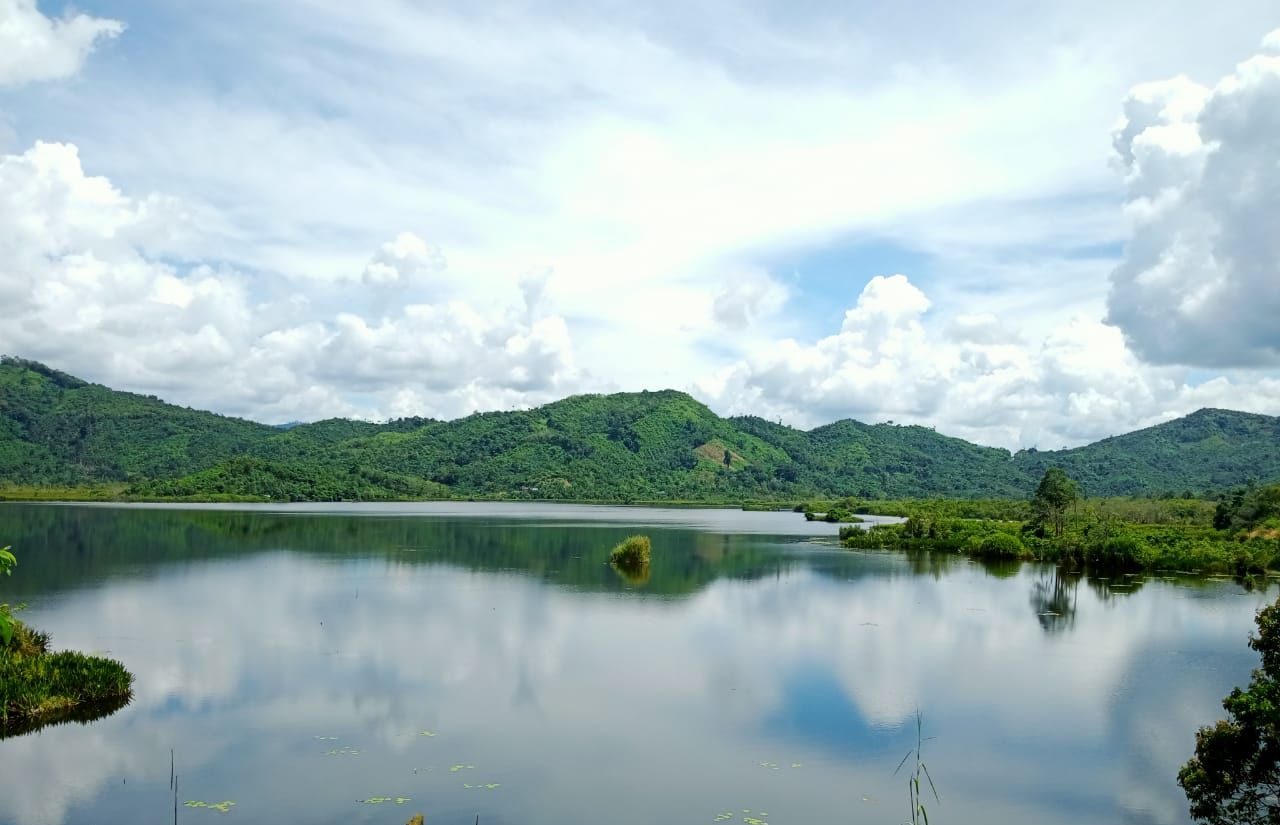 Foto: Esti PIbranto ·
Culture
Dalihan Na Tolu
The Batak Angkola follow a patrilineal kinship system with the marga as the main identity, including Harahap, Siregar and Pane. Family relations are governed by the Dalihan Na Tolu philosophy, which divides relatives into mora, kahanggi (together with the suhut) and anak boru. In the Angkola and Mandailing version, the principle reads "Hormat marmora, manat markahanggi, elek maranak boru".
Source: Suku Angkola — Wikipedia · Suku Batak — Wikipedia
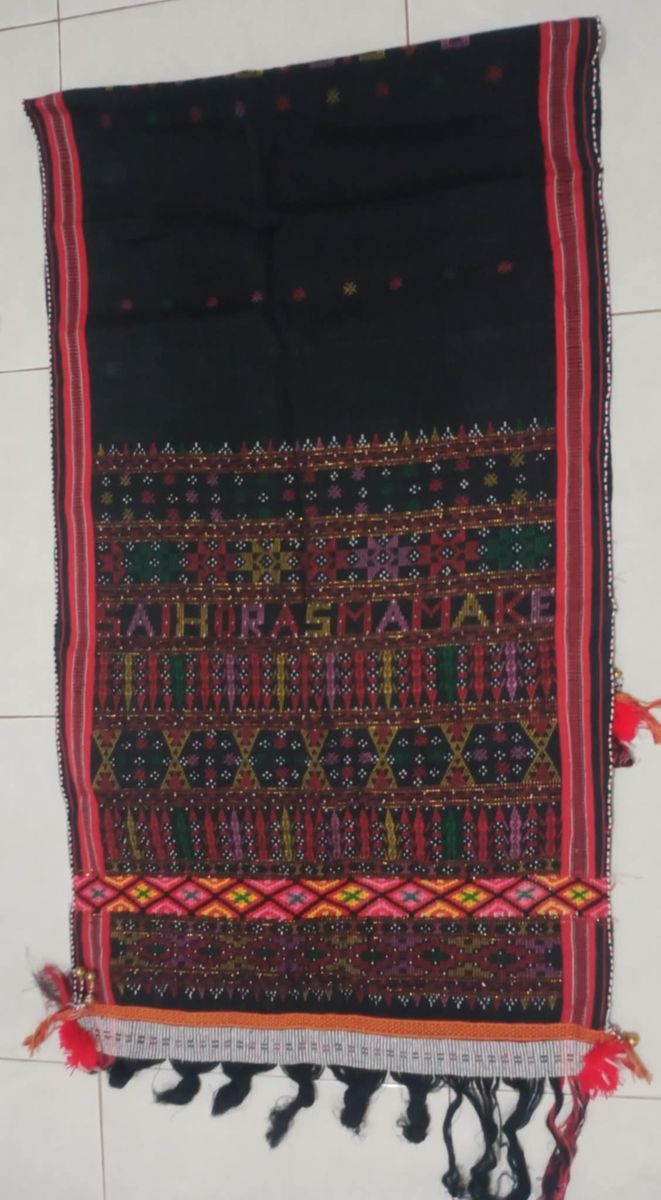 Foto: Asyafii ·
Parompa sadun
Parompa sadun is a traditional woven cloth of the Batak Angkola and a hallmark of South Tapanuli, measuring about 100 x 200 cm and decorated with beads and tassels. Parents give it to their daughter when she has her first child, in a ceremony called mangalehen or manjagit parompa. Parompa sadun is nicknamed "Tonunan ni Boru Regar Sipirok" and is used in adat ceremonies for both siriaon (joyful) and siluluton (mourning) occasions.
Source: Manjagit Parompa — Wikipedia · Paroppa Sadun.jpg — Wikimedia Commons
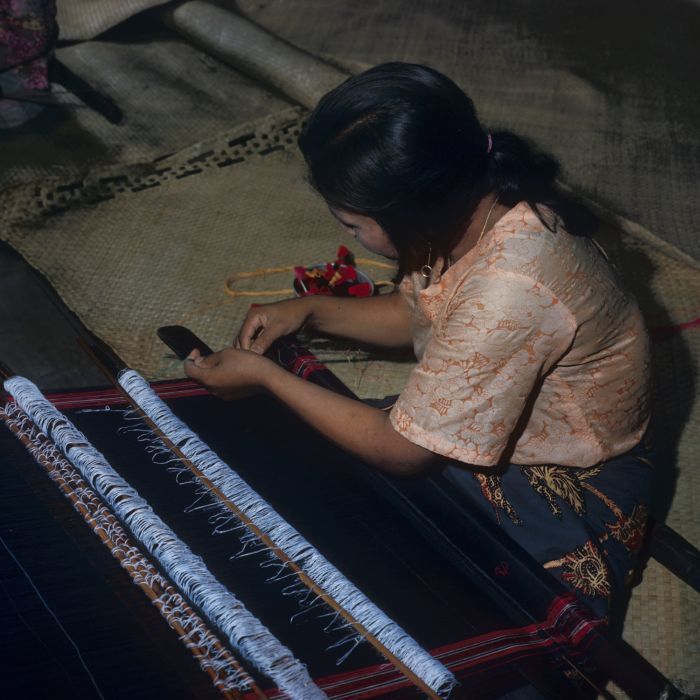 Foto: Boy Lawson ·
Sipirok weaving
Sipirok has many home industries weaving ulos and songket. Sipirok's typical crafts include ulos weaving, silungkang weaving and beadwork. The ulos Abit Godang and sadun cloths are also counted among the cultural hallmarks of the Angkola.
Source: Sipirok, Tapanuli Selatan — Wikipedia · Suku Angkola — Wikipedia
Bagas Godang and Sopo Godang
The traditional house of the Batak Angkola is called Bagas Godang, meaning "big house". Bagas Godang is a stilt house dominated by black, with an ijuk-fibre roof and plank walls, and without buffalo-head ornaments. The Bagas Godang complex includes the Sopo Godang, a hall for adat deliberations, facing the wide Alaman Bolak courtyard.
Source: Kabupaten Tapanuli Selatan — Wikipedia · Sipirok, Tapanuli Selatan — Wikipedia · Bagas Godang — Wikipedia
Onang-onang and Gondang
Onang-onang is a traditional Angkola and Mandailing song performed at adat ceremonies, especially the horja godang (great feast) of a wedding, and during manortor (dancing). The lyrics are not fixed but improvised by the paronang-onang, telling of marga, kinship and feelings. The Angkola gong ensemble is called Gondang Topap (topak), while onang-onang is accompanied by the Gondang Boru ensemble.
Source: Maronang-onang — Wikipedia · Onang-onang — Wikipedia · Ogung — Wikipedia
Angkola language and script
The Batak Angkola language is used daily and at adat events in South Tapanuli and Padangsidimpuan. It is closest to Batak Toba and Mandailing; its intonation is softer than Toba and firmer than Mandailing. The Angkola script has 21 basic characters (ina ni surat), and the language has registers such as ordinary speech, andung (refined) and bura (coarse).
Source: Bahasa Batak Angkola — Wikipedia · Kabupaten Tapanuli Selatan — Wikipedia · Suku Angkola — Wikipedia
History
-
Hindu-Buddhist period
Links to Padang Lawas and Portibi
According to B. G. Siregar in Surat Tumbaga Holing (1984), the Batak Angkola originally developed from the Portibi area, Padang Lawas (Padang Bolak). Portibi is home to the Hindu-Buddhist Bahal temple complex; its influence can be seen in script, astrology and Sanskrit vocabulary.
Source: Suku Angkola — Wikipedia
-
Early 19th century
The Padri War and the arrival of Islam
During the Padri War in the early 19th century, Padri forces carried out mass Islamisation of the Mandailing and Angkola. One of the Padri leaders, Tuanku Imam Lelo, built a fort that later became the nucleus of the city of Padangsidimpuan.
Source: Suku Batak — Wikipedia · Kota Padangsidimpuan — Wikipedia
-
1883–1906
Padangsidimpuan as capital of the Tapanuli Residency
In the Dutch East Indies era, Padangsidimpuan was the capital of the Tapanuli Residency before it moved to Sibolga. Angkola and Sipirok were then an onderafdeling centred on Padangsidimpuan.
Source: Kota Padangsidimpuan — Wikipedia · Suku Angkola — Wikipedia
-
1956
South Tapanuli Regency
Under Emergency Law No. 7 of 1956, Padangsidimpuan Regency was renamed South Tapanuli Regency, covering the former Afdeling Padangsidimpuan. The regency was later split, among others into the City of Padangsidimpuan (2001) and Padang Lawas and North Padang Lawas (2007).
Source: Kota Padangsidimpuan — Wikipedia · South Tapanuli Regency — Wikipedia
-
1975
Founding of the GKPA
The Gereja Kristen Protestan Angkola was officially founded on 26 October 1975 when it gained autonomy from the HKBP under the name HKBP-Angkola. The name Gereja Kristen Protestan Angkola has been used since its merger with the Gereja Protestan Angkola in 1988.
Source: Gereja Kristen Protestan Angkola — Wikipedia
-
2014
Sipirok becomes the seat of government
After Padangsidimpuan became an autonomous city, Sipirok was designated the new capital of South Tapanuli Regency. The regency offices moved from Padangsidimpuan to Sipirok in mid-2014.
Source: Sipirok, Tapanuli Selatan — Wikipedia
Dalihan Na Tolu
Mora, kahanggi and anak boru. The principle: hormat marmora, manat markahanggi, elek maranak boru.
Mora is the family that gives the boru (the wife's family) and holds the most honoured position in adat.
Kahanggi are relatives of the same marga (the husband's family) who, together with the suhut, host a horja or adat celebration.
Anak boru is the family that receives the boru, i.e. the family of a sister or of a sister's husband.