Pakpak
Njuah-njuah
The Pakpak live in Dairi and Pakpak Bharat regencies and in parts of Humbang Hasundutan, Central Tapanuli, Aceh Singkil and Subulussalam. The Pakpak lands are traditionally divided into several suak, including Simsim, Keppas and Pegagan.
- Region
- Dairi, Pakpak Bharat
- Language
- Pakpak
- Kinship
- Sulang Silima
Source: Suku Pakpak — Wikipedia
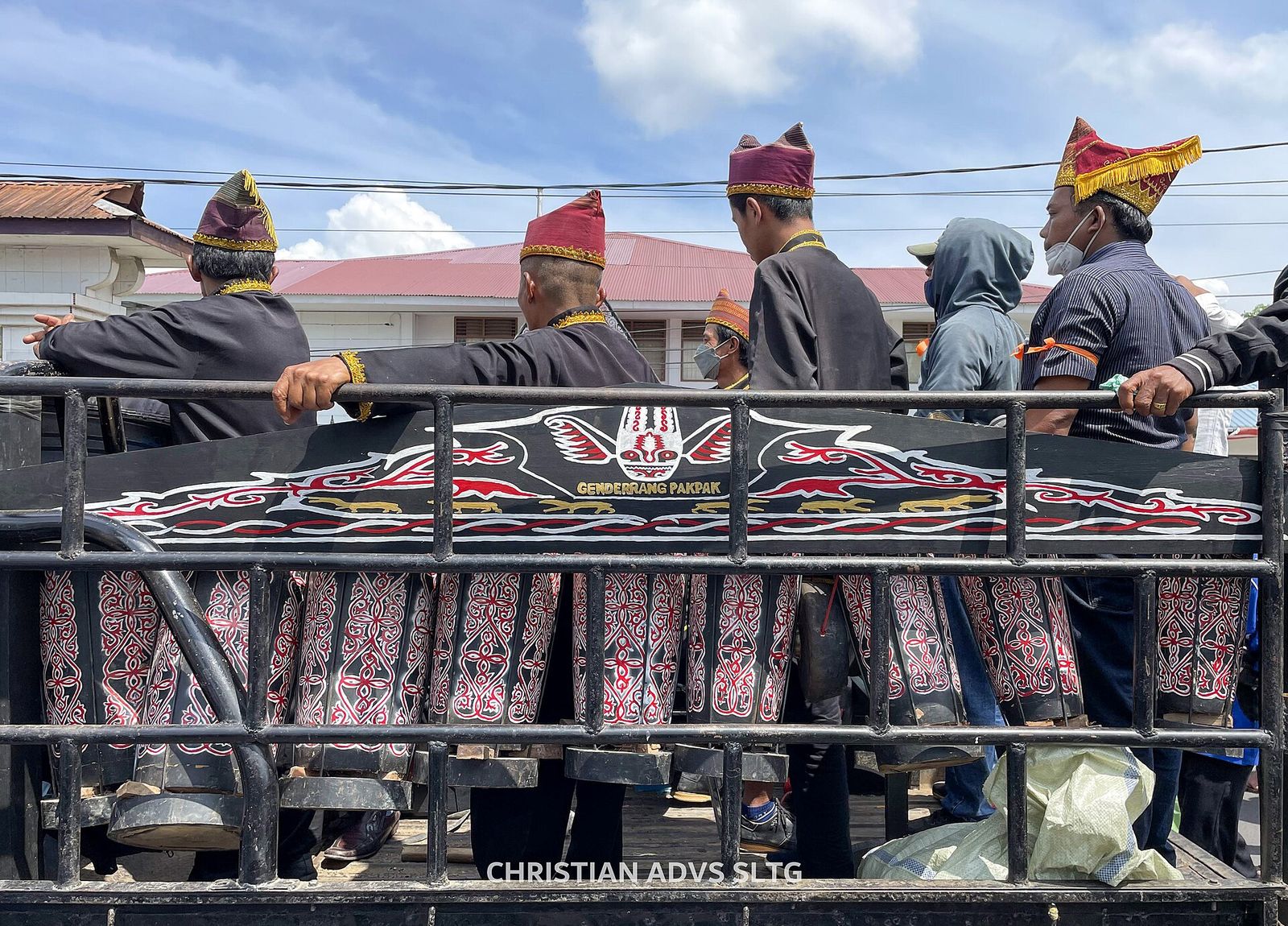 Foto: Christian Advs Sltg ·
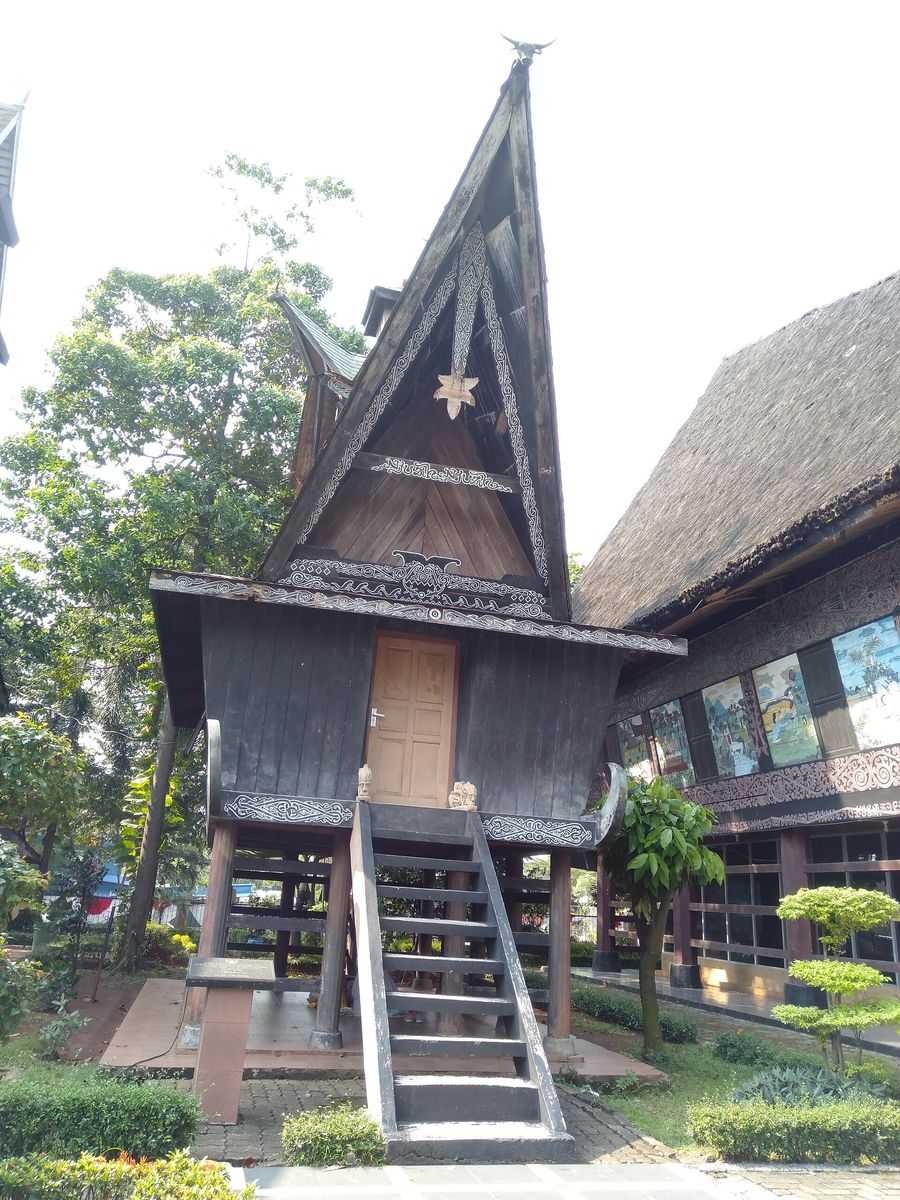 Foto: Ardzun ·
 Foto: Dyalim ·
Culture
Sulang Silima
Pakpak society is bound by the Sulang Silima social structure, made up of five elements: perisang-isang (eldest sinina), pertulan tengah (middle sinina), perekur-ekur (youngest sinina), berru (bride-receiving relatives) and puang or kula-kula (bride-giving relatives). All five must be involved for decisions on kinship and adat ceremonies to be valid under adat, both in the lebbuh (single-marga community) and in the kuta (village).
Source: Suku Pakpak — Wikipedia · Pakpak people — Wikipedia · Kabupaten Pakpak Bharat — Wikipedia
Kerja mbaik and kerja njahat
Pakpak adat ceremonies are called kerja or kerjakerja and fall into two kinds: kerja mbaik for joyful occasions and kerja njahat for mourning. Examples of kerja mbaik are merbayo (wedding), menanda tahun (rice-planting ceremony) and merkottas (starting risky work); examples of kerja njahat are mengrumbang and mate ncayur ntua (funeral ceremonies). Menanda tahun is held once a year before the planting season, among others by the Manik marga at Delleng Simenoto, Kecupak I village.
Source: Suku Pakpak — Wikipedia · Pakpak people — Wikipedia · Menanda Tahun — Dinas Pariwisata Kab. Pakpak Bharat (arsip)
Oles and traditional dress
Oles is the traditional Pakpak cloth worn at ceremonies such as weddings and the installation of adat leaders. In traditional dress, men wear the merapi-api shirt, bulang-bulang made of oles perbunga mbacang and a sarong of oles sidosdos, while women wear oles perdabaitak and a saong head covering made of oles silima takal. The base colours black, red and white are called bennang sitellu rupa.
Source: Pakaian Adat Pakpak dan Perlengkapannya — Dinas Pariwisata Kab. Pakpak Bharat (arsip) · Traditional Fabrics of North Sumatra — Indonesia.travel
Genderang
Genderang sisibah is an ensemble of nine drums played by musicians called pande. For the Pakpak, its presence validates the highest kerja mbaik, such as weddings, the inauguration of a new house or a mejan feast, and it must be approved by the Sulang Silima. To accompany dance there is also the oning-oningen ensemble with genderang sitelu-telu, gung sada rabaan, lobat, kalondang and kucapi.
Source: Genderang sisibah — Wikipedia · Tari Tatak Garo-Garo — Wikipedia · Suku Pakpak — Wikipedia
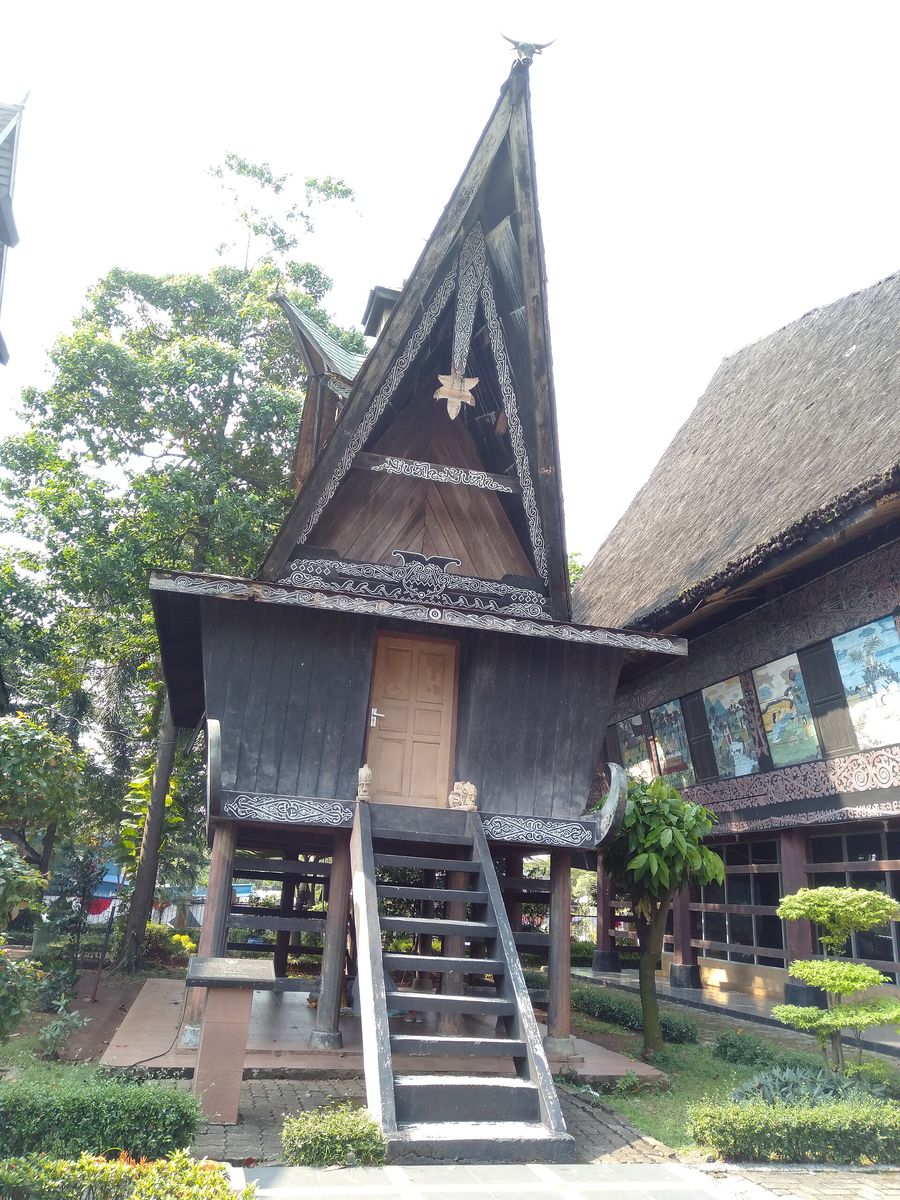 Foto: Ardzun ·
Gerga, ornaments of the traditional house
Gerga are decorative motifs on the traditional Pakpak house, each with its own meaning, for example gerga beraspati (a pair of geckos protecting the occupants) or gerga perkais manuk marak. The triangular panel at the front of the roof symbolises the three elements of kinship: kula-kula, dengan sibeltek and berru. The Pakpak house displayed at Taman Mini Indonesia Indah is known as Sopo Jojong.
Source: Gerga Pakpak — Dinas Pariwisata Kab. Pakpak Bharat (arsip) · Kabupaten Pakpak Bharat — Wikipedia
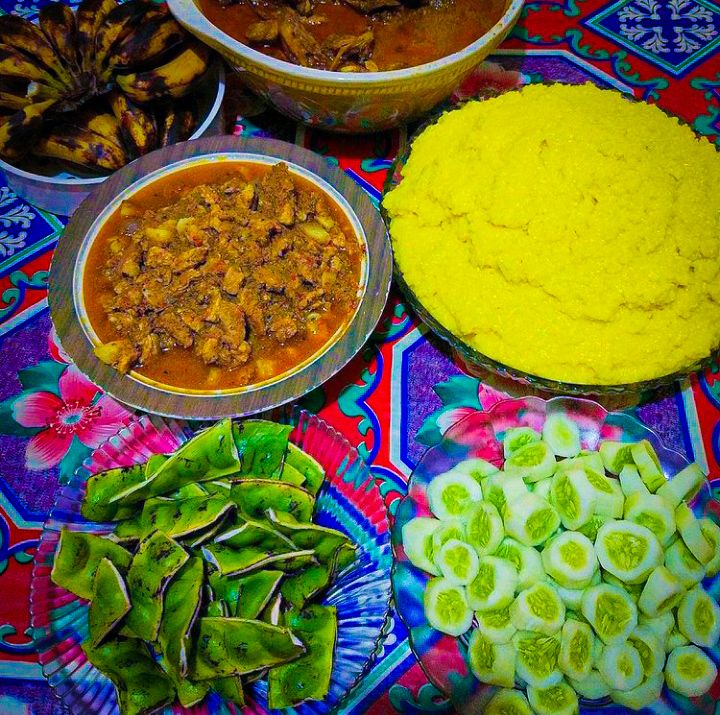 Foto: Kurnia Sinagaa ·
Pelleng
Pelleng is a typical Pakpak dish of soft rice seasoned with turmeric and spices, spicy in flavour and usually served with free-range chicken. It is served at adat events and important family occasions, for example before an exam, before leaving home to work elsewhere (merantau) or when looking for work, with a prayer (sodip) for spirit and courage. Each suak (Kelasen, Simsim, Boang, Keppas, Pegagan) has its own way of preparing pelleng.
Source: Pelleng — Wikipedia
Mejan
Mejan are stone statues long carved by the Pakpak and regarded as a symbol of pride. The Pakpak Bharat Tourism Office lists dozens of mejan, pertulanen and pengulu balang sites belonging to various marga, including in Sitellu Tali Urang Julu, Pagindar, Pergetteng-getteng Sengkut and Salak.
Source: Patung Mejan — Dinas Pariwisata Kab. Pakpak Bharat (arsip) · Informasi Destinasi Wisata di Kabupaten Pakpak Bharat — Dinas Pariwisata Kab. Pakpak Bharat (arsip)
History
-
Oral tradition
Origins according to oral sources
According to oral tradition, the Simbelo, Simbacang, Siratak and Purbaji lived in the Pakpak area before the Pakpak arrived. Lapiken or laklak (bark books) name the first inhabitants as newcomers from India who were stranded at Barus on a large wooden raft. Marga names such as Lingga, Maha and Maharaja are seen as evidence of this contact, although stronger proof is still needed.
Source: Asal-usul dan persebaran orang Pakpak — Dinas Pariwisata Kab. Pakpak Bharat (arsip) · Kabupaten Pakpak Bharat — Wikipedia · Suku Boang — Wikipedia
-
Before the colonial era
Traditional governance of suak and kuta
Before the Dutch arrived, each suak was led by a raja ekuten or takal aur. Below the suak were kuta (villages) led by a pertaki, assisted by the elements of the sulang silima. This structure is no longer used in government but remains a source of Pakpak customary law.
Source: Kabupaten Pakpak Bharat — Wikipedia
-
1905
Beginnings of Christianity and the GKPPD
On 7 September 1905 the HKBP mission sent Rev. Samuel Panggabean to the Pakpak lands, and the first service was held in Kuta Usang, Suak Pegagan. The Gereja Kristen Protestan Pakpak Dairi (GKPPD) was later inaugurated as an independent synod in Medan on 25 August 1991.
Source: Gereja Kristen Protestan Pakpak Dairi — Wikipedia
-
1942
Japanese occupation
Under the Dutch, Dairi was an onderafdeling headed by a Dutch controleur together with a demang. When Japan occupied the area from 1942, local young men were forced to build the 65 km Sidikalang road.
Source: Dairi Regency — Wikipedia
-
1947 / 1964
Formation of Dairi Regency
Paulus Manurung was appointed the first head of Dairi in Sidikalang from 1 October 1947, a date later adopted as the anniversary of Dairi Regency. Dairi Regency was formally established in 1964 as a split from North Tapanuli Regency.
Source: Kabupaten Dairi — Wikipedia · Dairi Regency — Wikipedia
-
2003
Birth of Pakpak Bharat Regency
Under Law No. 9 of 2003, dated 25 February 2003, three districts in southern Dairi were split off to form Pakpak Bharat Regency with Salak as its capital. The regency was inaugurated on 28 July 2003; most of its territory is customary land (tanah ulayat) of the Simsim suak.
Source: Kabupaten Dairi — Wikipedia · Kabupaten Pakpak Bharat — Wikipedia · Pakpak Bharat Regency — Wikipedia
Sulang Silima
Sulang Silima, the five elements of Pakpak kinship: perisang-isang, pertulan tengah, perekur-ekur, berru and puang or kula-kula. Same-clan kin are called dengan sibeltek.
Eldest sinina, i.e. the eldest line or generation within a kin group.
Middle sinina, i.e. the middle line or generation.
Youngest sinina, i.e. the youngest line or generation.
Bride-receiving relatives, i.e. the family of a daughter's husband.
Bride-giving relatives, i.e. the wife's family; Wikipedia uses 'puang', while the Pakpak Bharat coat of arms uses 'kula-kula'.